First Letter from a Reader
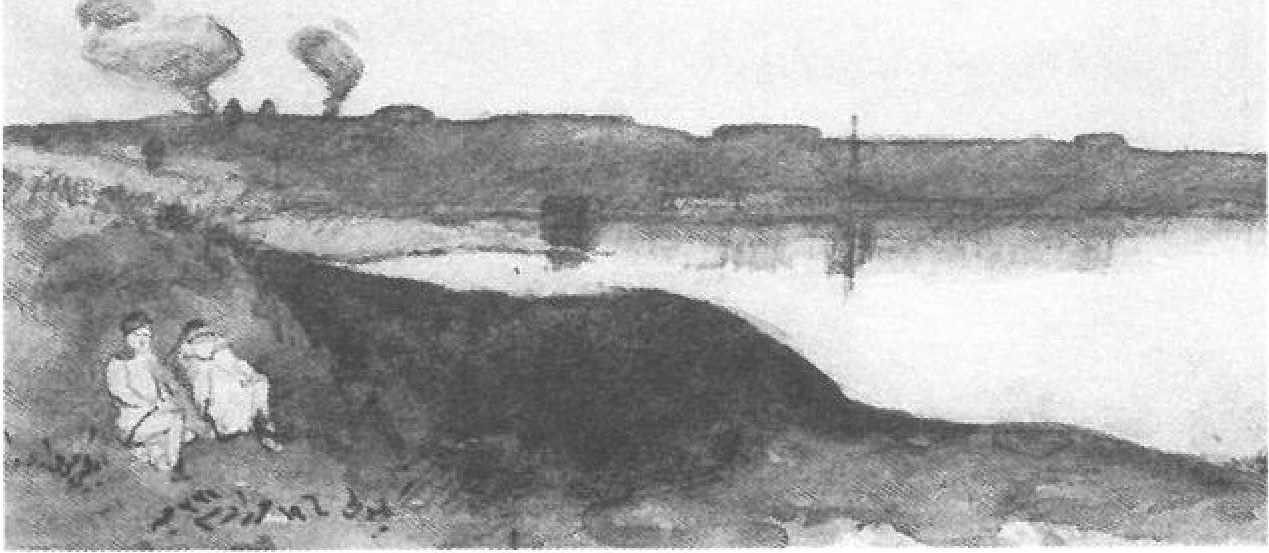
Opposition against the invader despite all odds, which is called “resistance,” began for the first time with us after the First World War. But perhaps because we viewed it as a duty, we put these epic days behind us as soon as we had gotten rid of the invaders.
The Condition of a Writer
The condition of a writer receiving his first letter from a reader is much like the drunkenness of someone having alcohol for the first time. You feel strange, become queasy, your head spins. Each new sensation brings you closer to the tantalizing pleasure you cannot really enjoy. The hangover comes later, after you’re used to drinking. Then you drink to forget. Writers who get letters every day must be alcoholics of a sort. They can’t enjoy this pleasure. Being drunk on my first reader’s letter, I am for the moment in complete ecstasy! Hopefully I won’t get so many that I become complacent—or get none at all and be deprived of having this pleasure again. For now, I cannot resist talking about this first letter, which has aroused such excitement in me.
The Hijacked Train
In an article that appeared in Yedigün, I had mentioned a train which was hijacked in the Geyve Pass in Adapazarı province during the War of Independence. I was very young at the time. I can picture some things clearly, others only vaguely. But my reader’s letter has refreshed the vague parts of my memory.
The man who sent the letter is Ahmet İnel, who now lives in Küre. The following sentences brought my childhood to life:
“With increasing violence Turkish villages were being attacked and plundered. Once the leaders were killed off one by one, the women were raped. In response to the grief and heartrending wails rising from every direction, the Istanbul government, without so much as a blush, was declaring in the daily newspapers and official communiqués that it was dealing with the concerns of the people and that public security was excellent.
“I was the administrator of the Söğütlü district. In Adapazarı there was neither government nor security. Being the so-called ‘civil servants’ of a defunct government, we were afraid to look people in the eye. Taxes were no longer being paid to a government that was helpless in the face of such disasters and whose tax agents were being driven out everywhere. I wasn’t able to collect my salary. My wife and children were hungry. Thank God for the wild boars in the area! I hunted them and sold them to the Christian villages and thereby eked out a subsistence for my family.
“One day Sadık, the Bulgarian, had come to Söğütlü with his guerrilla band. They were telling the villagers about the National Defense Force. As district administrator, I had joined Sadık Baba. I had shouldered the gun I had used to shoot the boars and joined the National Forces.
“At this time the Ankara government, seeing that the treasonous forces were rising like a tidal wave, sent a young general, Ali Fuat Paşa, to Geyve to halt them. On the general’s orders, our band had been given the task of transporting the munitions from the depot of the artillery training school at Maltepe. Thanks to Captain Sadık Baba’s unequalled courage and skill, his many years’ experience, and the precautionary measures he took—which still amaze me as much as they did the English—we emptied the great munitions dump and transported it, along with the parliamentarians sent out from Istanbul, to the station in Adapazarı.”
At this point my reader wrote how they had saved the munitions from the enemy forces which had occupied Adapazarı. He described his part in the incident of the hijacked train I had mentioned. Later he got permission from the captain of the band to go to Söğütlü for a while, where he’d worked as a civil servant and where at one time his family had lived. He settled his family in a secure place and, before returning to them, he stayed in Söğütlü at the home of the village headman, whom he considered a loyal friend. But this man was to betray him.
Capture and Torture
“I opened my eyes suddenly to a noise like that of thunder. I was surrounded by men armed to the teeth with guns and silver knives. They were the Caliphate forces known as the troops of Şirin Bey. I sat looking at their faces in a sleepy stupor. They looked like giant-sized, marble-headed bulldogs. These hungry dogs took my trousers off, stripped my jacket and vest off my back and removed my beloved sandals from my feet. They brought me to Adapazarı at a trot, half-naked, barefoot, and with an animal halter around my neck. Luckily for me, Anzavur had said, ‘Bring him to me alive. I have to make him talk.’ I was subjected to a thousand types of torture. Did they really think they could make me utter a word? They tortured me so much that some of the more compassionate among them said, ‘That’s enough. Let’s kill him and put an end to his suffering.’”
The Liberation
My reader described his sufferings in prison with a bitter tongue. But one morning when they had again subjected him to tough grilling, “Our young lions captured the city with lightning speed, and Anzavur escaped, but many of his men were taken.”
Throughout the Second World War many heroes emerged in the countries under the German yoke. In France the guerrilla organization called the “Resistance” gained the greatest glory among all the participants in that war. It was the same in all the other countries. But I think we were the only ones after the First World War to undertake such an action. Opposition against the invader despite all odds, which is called “resistance,” began for the first time with us after the First World War. But perhaps because we viewed it as a duty, we put these epic days behind us as soon as we had gotten rid of the invaders.
Sorrowful, Painful Days
They were sorrowful, painful days. It was necessary to forget them, to put them behind us. But what person remembering them would not feel a thrill? Men in headdresses, with swords and guns at their sides and their chests crossed with bandoliers, filled the streets with the staccato sound of their horses’ hooves. No one knew who they were; civil strife had obscured loyalties. Suddenly there would be bodies swinging from trees. Only their friends, whoever those men were, went into the streets.
Then one day other men with uncut hair and unshaven beards came riding into town like lightning on their small horses. The news spread everywhere: the National Forces had come! The streets were packed with people hugging and kissing each other. The good news that our army would soon move into action spread like wildfire.
While the guerrilla forces would go off to harass the enemy, the town would be empty. Then the sound of horses’ hooves would herald the cry: “The Caliph’s forces have arrived!” Several imams and four or five people with dark somber faces, prayer beads, round-trimmed beards and finely-decorated cloth turbans would be there in the streets.
The green-turbaned preachers with their enormous heads and flowing robes would accuse the National Forces of atheism and declaim about how the Caliph of the world had deemed it appropriate to be allied with the enemy. A youth who embraced a guerrilla from the National Forces was hanged, some townspeople and the mayor barely escaped a mob, and an elderly doctor was publicly beaten.
At last the country awoke one morning to the sound of cannon fire. Before you could ask what was happening, the local militia force of four or five sixteen-year-old kids under the command of the gymnastics teacher came running into town spreading the black news: “The enemy is coming.”
What followed was a terrifying doomsday confusion: bales and bales of possessions piled on carts which had been hitched to cows; people crossing the Sakarya River and then burning and destroying the bridges. This is how the exodus happened, leaving the country to fall barren into the enemy’s hands.
Grandfather’s Sacrifice
I, too, had crossed the Sakarya bridge like that as a child. My grandfather, inseparable from me, had stayed behind. He didn’t want to leave his home, so he had disappeared from sight. He was a captain: he couldn’t abandon ship. The crops in our fields were taller than I was. They would soon turn color for harvest.
My grandfather said to my father: “In any case, you will drive the enemy out sooner or later. Why should I leave my house and have them wreck it and burn it to the ground? What will they do to a seventy-year-old man? I won’t budge an inch. When you return, you’ll need bread, son.”
But when we returned he was gone. His room still smelled of contraband tobacco. His pot for brewing linden tea was still on top of the iron stove; the cigarette paper he had put in the broken chink of the lamp chimney was in place; his drooping moustache, grey beard and blue eyes still seemed to dominate the mirror. Thanks to him our house and possessions remained in place. Thanks to him a portion of our harvest had not been taken. But he himself had died, with all our names on his lips—Ahmet, Mehmet, Fatma, Münire, Sait.
The Weight of Years
Ahmet İnel’s letter took me back to those days. I found myself absorbed in my reminiscences.
After the War of Independence Ahmet İnel was appointed administrator of a town. But at one point he became very ill and requested a leave of absence. It was denied. He resigned. When he got well, he requested reassignment. I leave the rest of the story to his own pen.
“I got better and again applied to return to the civil service. The person who had to act on it considered my resignation an offense and insisted that I bring him a document from the higher authorities. The mentality of this person was such that within a short time he had forgotten everything that had happened and could focus on a worthless piece of paper to the exclusion of moral values.
“I had fought against those high-ranking, document-wielding people who held the fate of the nation in their hands and had not hesitated at one time to hand it over to foreign domination. Some of us had devastated those big shots with our vigorous faith, whose source I am unable to establish now.
“Since this last incident, I have been earning my living by working for private companies. At the same time I am fighting the battle of old age. I am tired of life. My friends, the outstanding young men and heroes of those dark but heroic days, have all withdrawn, one by one, from the stage of life. I cannot understand the reason for, or the meaning of, my continued existence as a completely worthless person. If only death, with which I have come face to face perhaps a hundred times before, would come silently one day and suddenly stop denying me the pleasure of rejoining my friends…”
This letter of a surviving resistance hero who kidnapped trains and munitions dumps during the War of Independence is my first letter from a reader. He enclosed a picture of himself, showing a long face with a sorrowful look, curly white hair, hollow cheeks, and thin, drawn lips. This story is his story.